Manifesto

Recognition should be consistent.
Motivation should be sustainable.
School culture should be built to last.

OUR STORY

It’s 6:00 PM.
The school day ended hours ago,
but the leadership team is still there.

AFTER THE BELL RINGS

Paper dollars are being cut. Inventory is being counted. Someone is planning a Costco run to restock before Monday morning. The counseling team gave up lunch periods this week to run the school store. Teachers are manually tracking points between lesson plans, behavior incidents, and parent calls.

Everyone is working hard to keep the system running. And despite all of it, the experience is still inconsistent for students.

Not because educators don’t care.


Because the infrastructure behind most student reinforcement systems was never designed to scale.
AFTER THE BELL RINGS

Paper dollars are being cut. Inventory is being counted. Someone is planning a Costco run to restock before Monday morning. The counseling team gave up lunch periods this week to run the school store. Teachers are manually tracking points between lesson plans, behavior incidents, and parent calls.

Everyone is working hard to keep the system running. And despite all of it, the experience is still inconsistent for students.

Not because educators don’t care.


Because the infrastructure behind most student reinforcement systems was never designed to scale.
THE FRAMEWORK WAS WORKING

Across the country, schools rely on Positive Behavioral Interventions and Supports (PBIS) and similar frameworks because they work. Students who feel recognized and connected are more likely to attend school, engage positively, and succeed academically.

The problem isn’t the framework.

The problem is execution.
THE FRAMEWORK WAS WORKING

Across the country, schools rely on Positive Behavioral Interventions and Supports (PBIS) and similar frameworks because they work. Students who feel recognized and connected are more likely to attend school, engage positively, and succeed academically.

The problem isn’t the framework.

The problem is execution.
THE SYSTEM WASN’T

Most schools still manage recognition systems through manual point giving systems, paper tickets, spreadsheets, and operational processes that depend heavily on individual teacher capacity. The result is predictable: systems become inconsistent, difficult to sustain, and time-consuming for staff.

Two students can make the exact same positive choices and have completely different experiences based on the classroom they walk into.

That’s not a teacher problem. It’s a systems problem.
THE SYSTEM WASN’T

Most schools still manage recognition systems through manual point giving systems, paper tickets, spreadsheets, and operational processes that depend heavily on individual teacher capacity. The result is predictable: systems become inconsistent, difficult to sustain, and time-consuming for staff.

Two students can make the exact same positive choices and have completely different experiences based on the classroom they walk into.

That’s not a teacher problem. It’s a systems problem.
BUILT BY EDUCATORS WHO LIVED IT

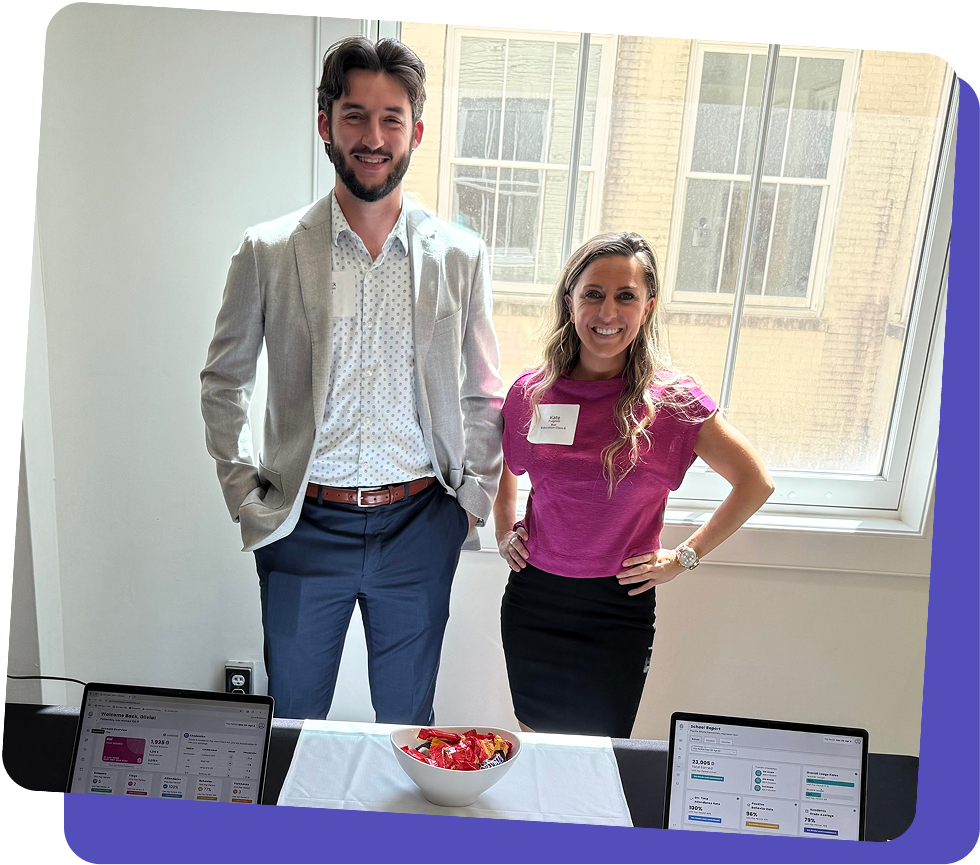
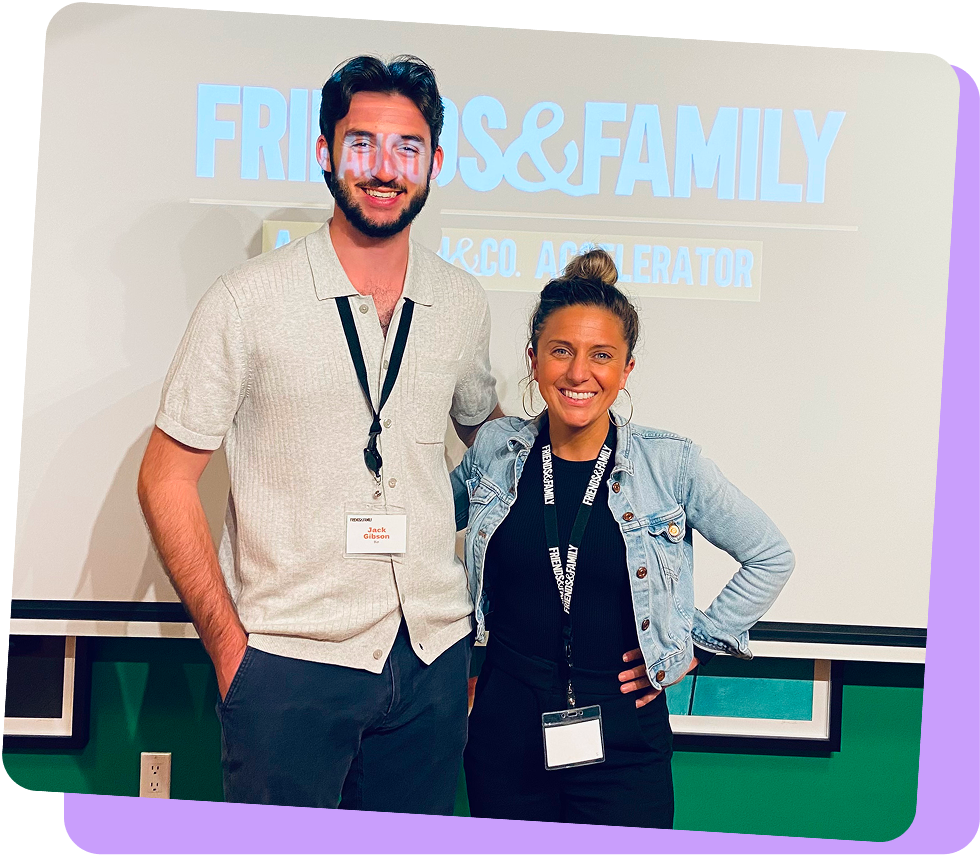
After years leading schools together across Duval County Public Schools in Jacksonville Florida, Kate Fulginiti and Jack Gibson had seen and lived the same pattern repeatedly. They believed deeply in positive reinforcement systems and had implemented them themselves across multiple campuses serving students with very different needs.

But they also saw the operational burden behind them.

At the same time, students had changed too.
BUILT BY EDUCATORS WHO LIVED IT

After years leading schools together across Duval County Public Schools in Jacksonville Florida, Kate Fulginiti and Jack Gibson had seen and lived the same pattern repeatedly. They believed deeply in positive reinforcement systems and had implemented them themselves across multiple campuses serving students with very different needs.

But they also saw the operational burden behind them.

At the same time, students had changed too.

Today’s learners grow up with personalization, progress tracking, digital ownership, gamification, and instant feedback embedded into nearly every experience they have outside of school.

Yet many student reinforcement systems still operate as disconnected add-ons rather than integrated infrastructure. Kate and Jack realized the framework was right.
But the infrastructure was outdated.

So in 2023, Kate and Jack stepped away from school leadership to build Bizi. Not as outsiders trying to disrupt education, but as educators who had lived the operational realities firsthand and believed schools deserved systems designed for the way students and educators actually function today.

Bizi was built to address four problems schools know too well

Inconsistent reinforcement

Recognition often depends more on teacher capacity than student merit. Bizi automates reinforcement through existing school data and workflows, helping schools create more consistent student experiences across classrooms and campuses.

Narrow definitions of student success

Most systems focus almost entirely on behavior. Bizi allows schools to reinforce attendance, academics, growth, responsibility, and positive engagement alongside behavior because student success is broader than discipline alone.

Unsustainable operational burden

Even digital systems can create enormous hidden workloads for educators. Bizi was designed to reduce logistical lift around tracking, management, incentives, and implementation so schools can sustain systems long term.

Outdated engagement models

Today’s students respond to ownership, visibility, goals, and real-world relevance. Bizi incorporates financial literacy, gamification, and student-owned accounts to create engagement models that feel intuitive from Kindergarten through 12th grade.


Recognition changes everything.
bizi makes it automatic.

We believe that:

Recognition drives culture. Culture drives outcomes.

Students perform better in environments where expectations are clear and positive actions are consistently reinforced.

We believe that:

Wealth is a mindset.
It’s never too early to start.

Every student deserves opportunities to earn, manage, save, spend, and make real financial decisions regardless of zip code or background. Financial literacy is most powerful when students practice ownership consistently, not just study it occasionally.

We believe that:

Educators deserve systems that reduce friction, not create it.

Schools do not need more disconnected initiatives that add operational burden. The best systems are the ones educators can sustain consistently without sacrificing time, energy, or relationships.
We believe that:

Today’s learners are deeply familiar with personalization, visibility, progress tracking, and digital ownership. Schools should be able to leverage those same dynamics in ways that are productive, motivating, and developmentally meaningful.

We believe that

Educators deserve systems that reduce friction, not create it

Schools do not need more disconnected initiatives that add operational burden. The best systems are the ones educators can sustain consistently without sacrificing time, energy, or relationships.


MEET THE TEAM

The alchemist

Kate Fulginiti

Co-Founder, CEO
The architect

Jack Gibson

Co-Founder, COO
The magician

Vajid Kagdi

Founding Engineer 
The sunshine

Yesenia Salazar

School Success Partner
the make it happen man

Mike Cecere

Senior School Success Partner
The cubs fan

Daniel Nava

Growth & Partnerships
the champion

Alison Najmy

School Success Partner 
PROGRESS
RECOGNITION
MOTIVATION
PROGRESS
RECOGNITION
MOTIVATION